

- This topic is empty.
-
AuthorPosts
-
January 5, 2026 at 7:55 am #5926


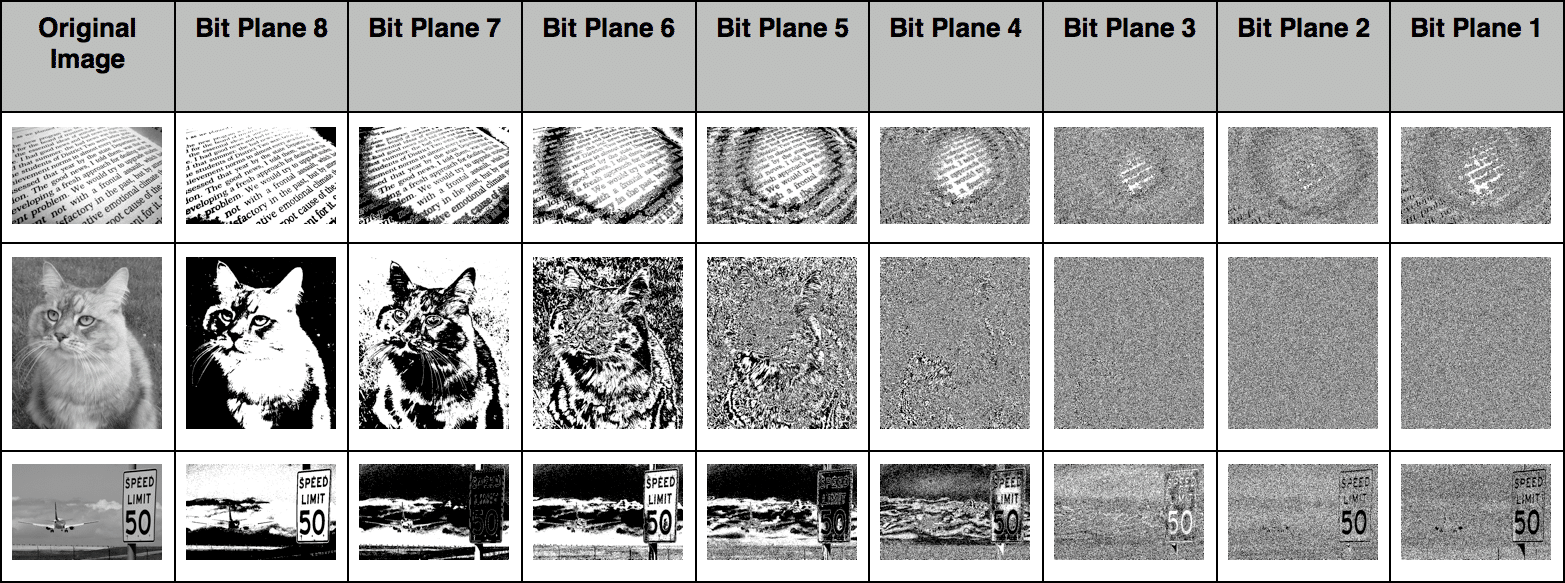

🔰 Initial Context (Read This First)
In image processing and steganography, hidden data is stored in the Least Significant Bits (LSBs) of pixel values.
A pixel value is just a number (for example,
13,200,255).
You are not required to convert this number into binary to extract its LSBs.Instead, Python’s modulo (
%) operator can do this efficiently.Your task is to implement a helper function:
extract_end_bits(num_end_bits, pixel)This function extracts the last
num_end_bitsbits of a pixel value and returns them as a base-10 integer.
📌 Problem Statement (Simplified)
- Input:
num_end_bits: how many LSBs you wantpixel: a pixel value (0–255)
- Output:
- The integer represented by the last
num_end_bitsbits
- The integer represented by the last
🧪 Given Examples
extract_end_bits(1, 13)  # returns 1
extract_end_bits(2, 13)  # returns 1
extract_end_bits(3, 13)  # returns 5
🧠 Key Insight (Very Important)
What does modulo do?
The modulo operator returns the remainder after division.
pixel % (2 ** num_end_bits)This remainder is exactly the value represented by the last
num_end_bitsbits.
❓ Q&A Explanation
Q1. What does “extracting LSBs” mean?
Answer:
It means taking the rightmost bits of a number’s binary representation and interpreting them as a new number.
Q2. Why are we told not to convert to binary?
Answer:
Because:- Binary conversion is unnecessary
- Modulo math already isolates the lower bits
- The solution should be short, efficient, and clean
Q3. How does modulo extract bits?
Answer:
Dividing by
2ⁿsplits the number into:- Higher bits (quotient)
- Lower
nbits (remainder)
The remainder is exactly what we want.
Q4. Why do we use
2 ** num_end_bits?Answer:
Because:- Each bit doubles the number of possibilities
nbits →2ⁿcombinations- Modulo
2ⁿkeeps only the lastnbits
Q5. Can you show this with
pixel = 13?Answer:
Binary of
13:1101Bits extracted Operation Result 1 LSB 13 % 212 LSBs 13 % 413 LSBs 13 % 85No binary conversion needed.
Q6. Why does
extract_end_bits(3, 13)return5?Answer:
- Last 3 bits of
1101→101 101in binary =5in decimal- Modulo automatically gives this value
Q7. What is the shortest correct implementation?
Answer:
def extract_end_bits(num_end_bits, pixel):
    return pixel % (2 ** num_end_bits)
That’s it.
Q8. Why does this work for images?
Answer:
Because:- Pixel values are integers
- Hidden image data is stored in LSBs
- Modulo isolates exactly those bits
Q9. How is this used later?
Answer:
This function is used in:- Grayscale image recovery
- RGB image recovery
- Bit-plane extraction
- Steganography decoding
Example usage:
lsb = extract_end_bits(1, pixel)
Q10. What would happen if we didn’t use modulo?
Answer:
We would need:- Binary conversion
- String slicing
- Re-conversion to decimal
All unnecessary and inefficient.
✅ Final Takeaways
- LSBs contain hidden data
- Modulo isolates lower bits cleanly
pixel % (2 ** n)extractsnLSBs- No binary conversion needed
- One-line solution is intentional
🧠 One-Line Intuition
Modulo by
2ⁿthrows away higher bits and keeps exactly the lastnbits.
- Input:
-
AuthorPosts

- You must be logged in to reply to this topic.